

Already a member?
Sign inBecome part of the foremost online community!
Sign Up NowOr, download the The Glaucoma Community app on your phone


Prevent Blindness and the CPSC
Fireworks can cause serious eye injuries in seconds. Learn how to celebrate safely, protect your family’s vision, and know what to do if an eye injury happens.
Fireworks are a popular part of many celebrations around the world. Whether you’re watching a Fourth of July display in the United States or enjoying fireworks during another holiday or festival. While they can be exciting to watch, they can also cause devastating injuries—particularly to the eyes. Even a single spark or flying piece of debris can lead to permanent vision loss.
This article is based on guidance from Prevent Blindness and the U.S. Consumer Product Safety Commission (CPSC) to help you celebrate safely while protecting your eyesight and the vision of those you love.*
Many people assume that only the person lighting fireworks is at risk. Unfortunately, that’s not true. Family members, neighbors, and even bystanders can be injured by fireworks that explode unexpectedly or travel off course.
According to the U.S. Consumer Product Safety Commission (CPSC), fireworks caused 15 deaths and an estimated 13,000 injuries in the United States in 2025. Burns accounted for 38% of all emergency department-treated injuries, and the hands and fingers were the most commonly injured body parts, followed by the head, face, and ears.

Another CPSC report from 2023 provides additional insight into who is most affected by these injuries. It found that:
Even fireworks that seem harmless can be dangerous. Sparklers, for example, burn at temperatures of about 1,800°F—hot enough to melt some metals and cause severe burns or permanent eye injuries.
Prevent Blindness recommends that nonprofessionals never use fireworks of any kind. The safest option is to attend an authorized public fireworks display conducted by trained professionals.
Even at public displays, it’s important to remember that accidents can still happen. To reduce your risk:
If you’re looking for ways to celebrate without fireworks, there are plenty of fun alternatives that are much safer for your eyes.
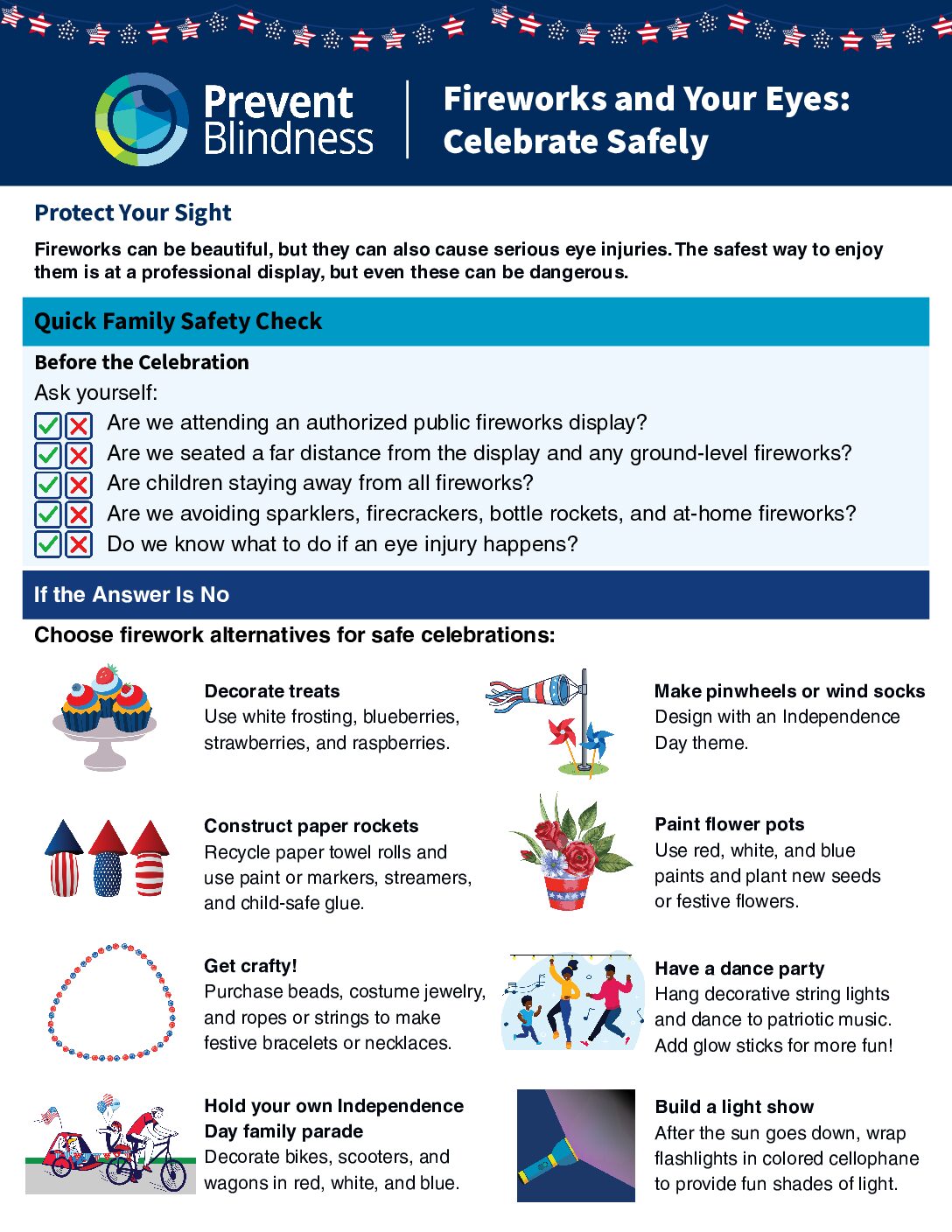
These activities create lasting memories without putting your family’s vision at risk.
An eye injury caused by fireworks is always a medical emergency. Acting quickly—and avoiding common mistakes—can help reduce further damage.
If someone experiences an eye injury:
Although it may be tempting to stop for pain medicine, getting medical attention as quickly as possible is much more important. Some medications, such as aspirin or ibuprofen, can increase bleeding and should not be given unless directed by a healthcare professional.
Prompt treatment can make a significant difference in preserving vision.
Children are naturally curious and may not understand how dangerous fireworks can be. That’s why adult supervision alone is not enough.
The best way to protect children is to keep them away from all fireworks, including sparklers, bottle rockets, and firecrackers.
Before heading to a celebration, ask yourself:
If the answer to any of these questions is “no,” consider choosing one of the many safe celebration ideas instead.
Most fireworks injuries are preventable. While fireworks may last only a few moments, the damage they cause can last a lifetime. Protecting your eyesight doesn’t mean giving up the fun—it simply means making safer choices.
This Independence Day, enjoy the celebration with family and friends, watch professional fireworks from a safe distance, and choose activities that help everyone make happy memories while keeping their vision protected. A little planning today can help ensure you and your loved ones continue seeing tomorrow’s celebrations clearly.
The information provided by The Glaucoma Community is for educational purposes only and does not replace professional medical advice. Always talk with your healthcare provider before making changes to your treatment or care. The Glaucoma Community does not endorse specific treatments, providers, or products.
Source: {{articlecontent.article.sourceName}}
Receive daily updated expert-reviewed article summaries. Everything you need to know from discoveries, treatments, and living tips!
Already a Responsum member?
Available for Apple iOS and Android


We've sent a report to our community managers who will take the necessary steps. This member will be removed form your Community Chat and will no longer be able to message you.
Please contact us if you have any questions.
Add Comments
Cancel