

Already a member?
Sign inBecome part of the foremost online community!
Sign Up NowOr, download the The Glaucoma Community app on your phone


Ophthalmology Times
Learn how OCT imaging and artificial intelligence may help detect glaucoma years before vision loss. Experts explain early warning signs and why early diagnosis matters.
One of the biggest challenges in glaucoma care is detecting the disease before vision loss begins.
Glaucoma often develops silently. Many people do not notice any symptoms until the disease has already caused permanent damage to the optic nerve. That’s why researchers and eye specialists are focusing on ways to identify glaucoma years earlier, before vision is affected.
At the 2nd International Glaucoma Symposium held in Mainz, Germany, experts discussed how the combination of new imaging technologies and artificial intelligence (AI) could help doctors detect glaucoma earlier and improve long-term outcomes.
Among the experts contributing to the discussion was Dr. Marta Pazos, director of the Clinic Ophthalmology Institute at Hospital Clinic Barcelona, who specializes in glaucoma diagnosis and advanced imaging.*
In the earliest stage of the disease, called pre-perimetric glaucoma, damage to the optic nerve can already be happening even though visual fields still appear normal.
According to Dr. Pazos, careful examination of the optic nerve using OCT technology remains one of the most important steps in detecting early glaucoma.
One of the earliest warning signs doctors look for is thinning of the neuroretinal rim, a part of the optic nerve that contains nerve fibers responsible for carrying visual information back to the brain.
Usually before there is definite visual field damage, approximately one-half of the optic nerve is damaged. These changes often appear in specific areas of the optic nerve and can signal early damage before patients experience noticeable vision problems.
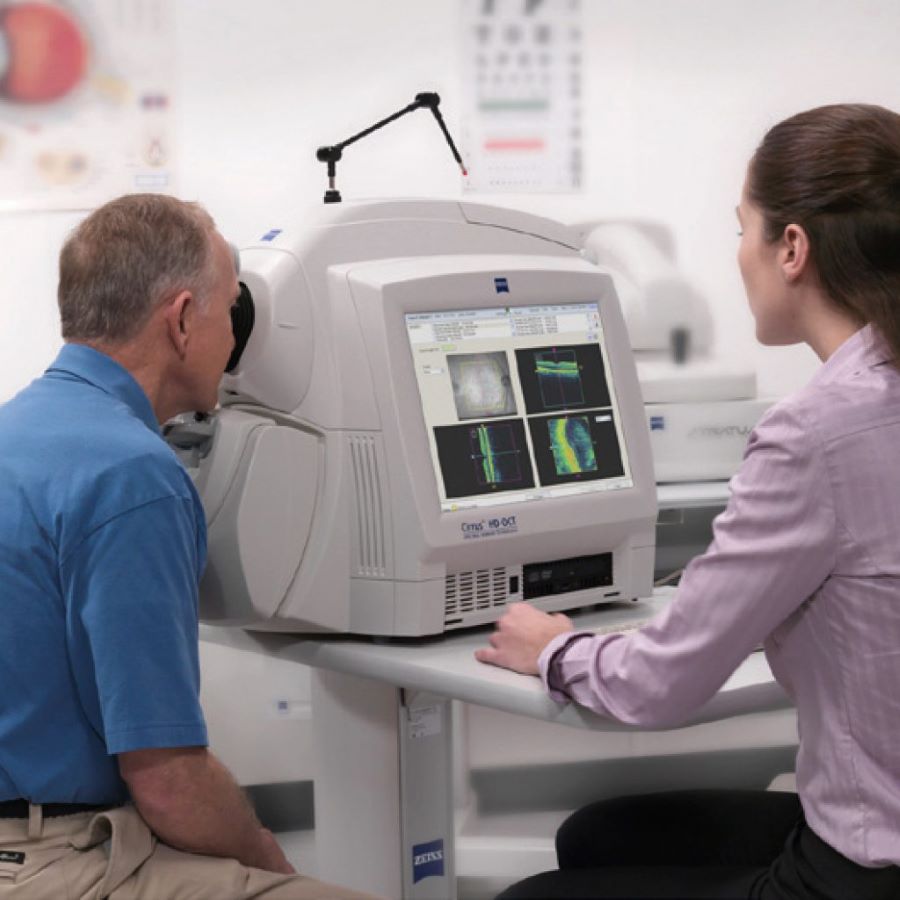
Today, one of the most powerful tools for detecting early glaucoma is optical coherence tomography (OCT).
OCT is a painless imaging test that creates detailed cross-section images of the eye, allowing doctors to measure the thickness of important structures such as the retinal nerve fiber layer.
This imaging can reveal very small changes that may indicate early glaucoma.
Studies have shown that structural changes detected with OCT can appear 3 to 7 years before visual field tests show vision loss.
That early window is critical because starting treatment sooner may help slow the disease and protect vision over time.
Artificial intelligence is beginning to play a role in glaucoma detection as well.
AI systems can analyze multiple types of eye images, including:
Some advanced AI tools can even combine these images with clinical information to help predict a patient’s risk of developing glaucoma or experiencing faster disease progression.
According to Dr. Pazos, this technology could help doctors move beyond a simple yes-or-no diagnosis and instead focus on predicting risk and identifying which patients need closer monitoring.
Even with advanced imaging tools, diagnosing early glaucoma can still be challenging.
Some healthy eyes may appear abnormal on imaging tests—a situation sometimes called “red disease,” where scans incorrectly suggest glaucoma.
On the other hand, some eyes with real glaucoma damage may appear normal on tests, known as “green disease.”
Certain eye characteristics can make interpretation more difficult, including:
Other eye conditions, such as optic neuritis or ischemic optic neuropathy, can also mimic glaucoma.
For this reason, doctors do not rely on a single test. Instead, they combine imaging results with other clinical information such as eye pressure measurements, optic nerve examination, and visual field testing.
Detecting glaucoma early can make a major difference in long-term outcomes.
Because glaucoma damage cannot be reversed, the goal of treatment is to slow or stop further damage.
According to Dr. Pazos, identifying glaucoma before vision loss begins can significantly improve a patient’s visual prognosis and quality of life during the patient’s extended lifetime
Early diagnosis may allow doctors to start treatment sooner, monitor disease progression more closely, and help patients protect their remaining vision for many years.
Another promising benefit of AI is its potential to help identify glaucoma earlier in the broader population.
Glaucoma is widely considered underdiagnosed, meaning many people have the disease without knowing it. In more developed countries, approximately 50% of those who have glaucoma are unaware of the disease.
AI tools could help by analyzing eye photographs taken in:
These systems could identify patients who should be referred to glaucoma specialists for further evaluation.
Some hospitals are already testing these approaches to improve referral systems and detect glaucoma earlier without overwhelming specialty clinics.
While new technologies are improving glaucoma detection, regular eye exams remain the most important step in protecting your vision.
If you have risk factors for glaucoma, such as family history, older age, or elevated eye pressure, or African American or Hispanic races, routine eye exams with imaging tests like OCT may help identify the disease early. OCTs are painless, quick, and do not involve dilation or an instrument touching your eye.
Ask your doctor:
These questions can help you better understand your risk and how your eyes are being monitored over time. The earlier glaucoma is detected, the better the chances of preserving vision and maintaining quality of life.
*Ophthalmology Times. (March 12, 2026). “Detecting glaucoma before vision loss: the early indicators, imaging technologies, and the role of AI”. ophthalmologytimes.com
Medically reviewed by Alan Robin, MD. Dr. Robin is a leading glaucoma specialist and researcher. He serves as an Associate Professor of Ophthalmology at Johns Hopkins University and has contributed extensively to the development of modern glaucoma treatments. Dr. Robin has authored more than 260 peer-reviewed publications and is widely recognized for his impact on patient care and global eye health.
The information provided by The Glaucoma Community is for educational purposes only and does not replace professional medical advice. Always talk with your healthcare provider before making changes to your treatment or care. The Glaucoma Community does not endorse specific treatments, providers, or products.
Source: {{articlecontent.article.sourceName}}
Receive daily updated expert-reviewed article summaries. Everything you need to know from discoveries, treatments, and living tips!
Already a Responsum member?
Available for Apple iOS and Android


We've sent a report to our community managers who will take the necessary steps. This member will be removed form your Community Chat and will no longer be able to message you.
Please contact us if you have any questions.
Add Comments
Cancel