

Already a member?
Sign inBecome part of the foremost online community!
Sign Up NowOr, download the The Glaucoma Community app on your phone


Glaucoma Research Foundation
Learn how glaucoma progresses, what each stage means for your vision, and the steps you can take to protect your eyesight for years to come.
Glaucoma is often called the “silent thief of sight” because it can cause permanent vision loss before you notice any symptoms. This group of eye diseases damages the optic nerve, which carries visual information from your eyes to your brain. Once vision is lost from glaucoma, it cannot be restored.
The good news is that early diagnosis and proper treatment can help slow or even stop further vision loss for many people. In this article, adapted from information published by the Glaucoma Research Foundation and reviewed by glaucoma specialist Dr. Sarah H. Van Tassel, you’ll learn how glaucoma typically progresses and what you can do to protect your vision.*
Every person’s experience with glaucoma is different, but doctors generally describe the disease as progressing through four stages.
At this stage, you may not have glaucoma yet, but your eye doctor has identified factors that increase your risk.
These risk factors may include:
You will not notice any vision changes during this stage, and visual field tests typically appear normal.
Your doctor may recommend:
This stage offers an important opportunity to prevent future damage before it occurs.
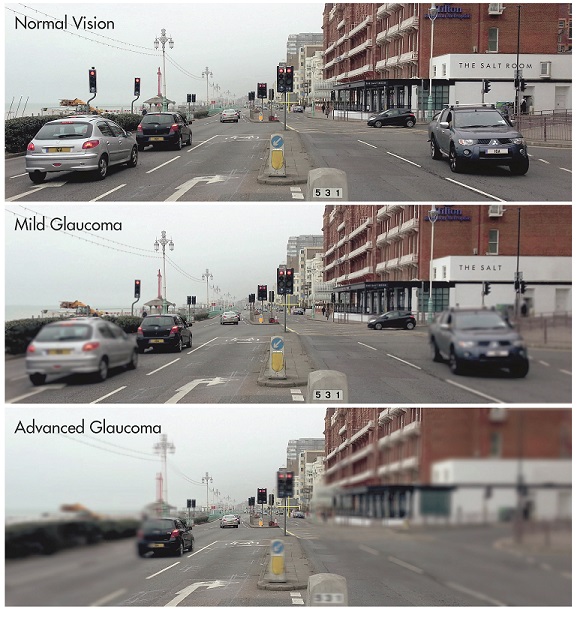
In mild glaucoma, your eye doctor can detect early damage to the optic nerve. However, you may still have normal vision and no noticeable symptoms.
Because glaucoma damage often begins outside your central vision, many people don’t realize anything has changed.
Treatment at this stage usually focuses on lowering eye pressure through:
The goal is simple: stop further damage before vision loss becomes noticeable.
For many people, treatment started during this stage can successfully preserve vision for years or even decades.
By the time glaucoma reaches the moderate stage, damage to the optic nerve has become more significant.
Small areas of peripheral (side) vision loss may appear. However, many people still don’t notice these blind spots because the brain can compensate for missing visual information.
Some people begin to experience difficulties with:
Treatment often becomes more aggressive and may include:
Following your treatment plan carefully becomes especially important at this stage.
In advanced glaucoma, vision loss becomes much more noticeable.
Damage to peripheral vision may be extensive, and central vision can also become affected. Daily activities may become increasingly difficult, including:
Treatment usually focuses on preserving the vision that remains. Doctors may recommend:
Although vision already lost cannot be restored, treatment can still help protect remaining sight and maintain independence.
Whether you are newly diagnosed or have been living with glaucoma for years, there are steps you can take to help protect your eyesight.
Comprehensive eye exams remain the best way to detect glaucoma early and monitor progression.
Your doctor may recommend more frequent exams if you:
Regular testing allows your doctor to identify changes before they affect your daily life.
Following your treatment plan consistently can make a significant difference in preserving your vision.
Whether your treatment involves eye drops, laser therapy, surgery, or a combination of approaches, the goal is to keep eye pressure at a level that protects the optic nerve.
Even when your vision seems stable, it’s important to continue treatment and attend follow-up appointments, as glaucoma damage can occur silently.
Understanding your personal risk can help you stay proactive about your eye health.
Age, family history, elevated eye pressure, diabetes, and certain ethnic backgrounds can all increase the likelihood of developing glaucoma.
Sharing your family history with your eye doctor can help guide screening decisions.
Even subtle changes deserve attention.
Contact your eye doctor if you notice:
Early intervention can make a meaningful difference.
Glaucoma is a lifelong condition, but it doesn’t have to define your future. Understanding how glaucoma progresses can help you recognize the importance of early detection, consistent treatment, and regular follow-up care.
The earlier glaucoma is found, the more opportunities you have to protect your vision. By working closely with your eye care team and staying committed to your treatment plan, you can take an active role in preserving your sight and maintaining your quality of life for years to come.
*Glaucoma Research Foundation. (December 23, 2025). “How Glaucoma Progresses and What You Can Do to Protect Your Vision.” glaucoma.org
The information provided by The Glaucoma Community is for educational purposes only and does not replace professional medical advice. Always talk with your healthcare provider before making changes to your treatment or care. The Glaucoma Community does not endorse specific treatments, providers, or products.
Source: {{articlecontent.article.sourceName}}
Receive daily updated expert-reviewed article summaries. Everything you need to know from discoveries, treatments, and living tips!
Already a Responsum member?
Available for Apple iOS and Android


We've sent a report to our community managers who will take the necessary steps. This member will be removed form your Community Chat and will no longer be able to message you.
Please contact us if you have any questions.
Add Comments
Cancel